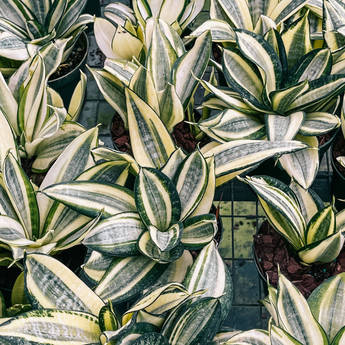
Snake plants, also known as Sansevieria, gets its name from the long sword shaped leaves that grow vertically and feature striking variegation (colors and patterns). Plant collectors and everyday people love the low amount of maintenance a snake plant requires along with the variety of colors, shapes, and species available.
When you shop for snake plants here at BWH Plant Co you’ll find rare and intricate sansevieria like the Braided Cylindrica (Dragon Fingers) or the Ghost known for its creamy white coloring, as well as classics like Laurentii and Siam Silver. And we’re here to support you and your new snake plant from the time you purchase to caring for it as you enjoy your Sansevieria for years to come.
Below you’ll find common questions like if snake plants are toxic to cats and dogs, as well as how to care for your Sansevieria plant. If you can’t decide which one to buy, you’ll find staff favorites to make the decision easy.
How Often to Water Snake Plants
You should water your snake plant every two to six weeks giving the soil time to dry out as too much water will lead to root rot, and Sansevieria prefers drying out almost completely before more water is added. Using a water meter will be the easiest way to determine when the soil is dry enough through the bottom depending on the size of the pot your snake plant grows in.
The Amount of Sunlight Sansevieria Needs
Snake plants prefer bright but indirect sunlight making them perfect for rooms with windows, and they can thrive in dim light making them ideal for offices, basements, and rooms without natural light. Do not place a sansevieria in direct sunlight as it will burn the leaves and cause damage to the plant.
How Often Snake Plants Flower
Snake plants may flower once a year if they are being grown indoors and are experiencing a slight amount of stress by being root bound (they have outgrown their pot), their environment has changed including light, heat and humidity, or they have reached maturity. Sansevieria blooming does not mean they are unhealthy, but if the cause is being root bound it is time to move them to a larger pot.
Are Snake Plants Safe for Pets?
No, snake plants or Sansevieria are not safe for cats, dogs, or other household pets. You should keep them out of reach and if you notice the plant has been chewed, contact your Veterinarian immediately.
Shop Staff Favorites
Ready to find your new snake plant? Here are some staff favorites to help you pick the perfect one.
Cylindrica
A unique variety with tall, tubular leaves that grow upright in a structured, cylindrical shape. It’s incredibly low-maintenance and can tolerate a range of lighting conditions, from bright indirect light to low light. Its minimalist look makes it perfect for offices or modern spaces.
Laurenetii
A classic variety known for its tall, upright leaves edged with bright yellow. It’s incredibly tolerant of low light and sporadic watering, making it an ideal choice for busy plant parents or low-maintenance home decor.
Whale Fin
This stunning variety is known for its massive, paddle-shaped leaves that resemble a whale's fin. With just one leaf, it can grow impressively large, making it a striking statement piece. Like other Sansevierias, it thrives on neglect and only needs watering once the soil is completely dry.